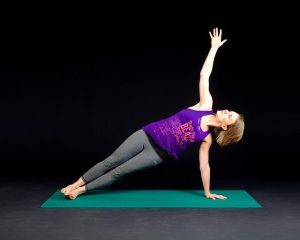
 Core stability and core strength are terms that are often used interchangeably when talking about your core muscles, whether in the rehabilitative or traditional fitness environments. However, while the two concepts are related by the same muscle group, the specifics are actually quite different. Focusing on improving both your core strength AND stability can help improve posture, make you less injury prone, and avoid creating imbalances in your body…all of which are critical for improving and maintain the health of your back.
Continue reading “Core Stability and Core Strength: What’s the Difference (Why Do You Need Both?)”
 In order to keep your back as healthy as possible, it is important to understand the concept of the core. A common misconception is that the core is simply just your abs.
 If you’re in the midst of recovering from a back injury, there are probably certain things you can’t do, which has impacted your daily life in some way, shape, or form. However, that doesn’t mean you have to do away with your morning routine!
 Could your diet be contributing to your back pain? Maybe. Inflammation can make back pain worse, and there are several foods that have been shown to increase inflammation. These foods include:
 “Stand up straight, even if it hurts.” That sentence has been engrained in me by my chiropractor ever since I started on my healing journey, and it will be forever etched in my brain. It took me a while to correct my postural issues, but now that I’ve corrected them, I really can’t imagine living any other way. Although it took time, but now, it’s actually harder for me NOT to stand up straight.
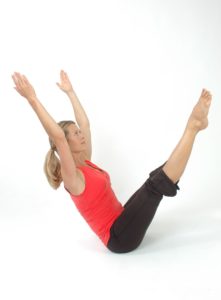 While many people automatically assume Yoga is the go-to for those with back problems, it’s sister workout, Pilates, doesn’t always get the attention it deserves. For me, Pilates was integral to my recovery and still is the main focal point of my routine now that I’m better.
 Yup, I admit – I’ve hit the gratitude bandwagon pretty hard. I have learned that not only will a grateful attitude help during a physical setback, but it is essential. Why? It’s pretty simple, actually. It makes you appreciate what you have (and what you can do) rather than what you don’t have (and what you can’t do). That’s it…really. It shifts your focus. Focus on what’s good, and you move towards more good.
 Here’s something you may not already know: it is estimated that 90 percent of all world-class athletes use chiropractic care to prevent injuries and improve their performance. Just take it from Tom Brady. Even if you aren’t a New England Patriots fan, you can’t deny he knows a thing or two about health and fitness.
 So it’s sort of a weird catch 22: it can be difficult to sleep if your back hurts. But more often than not, your back actually hurts more because of the position in which you’re sleeping! Mind blown? You’re welcome.
 I know firsthand that the mental effects of a back injury can be just as, if not more, difficult to manage than the physical ones. And for people like us – active individuals, fitness enthusiasts, athletes – it’s particularly difficult to cope with a physical setback because (I’ll just say it straight…), we literally have NO idea what to do with ourselves if we can’t do. Trust me I get it…I’ve been there.